Unfinished Fantasies: 5 Classic Movies That Cried Out for a Sequel
May 21, 2026
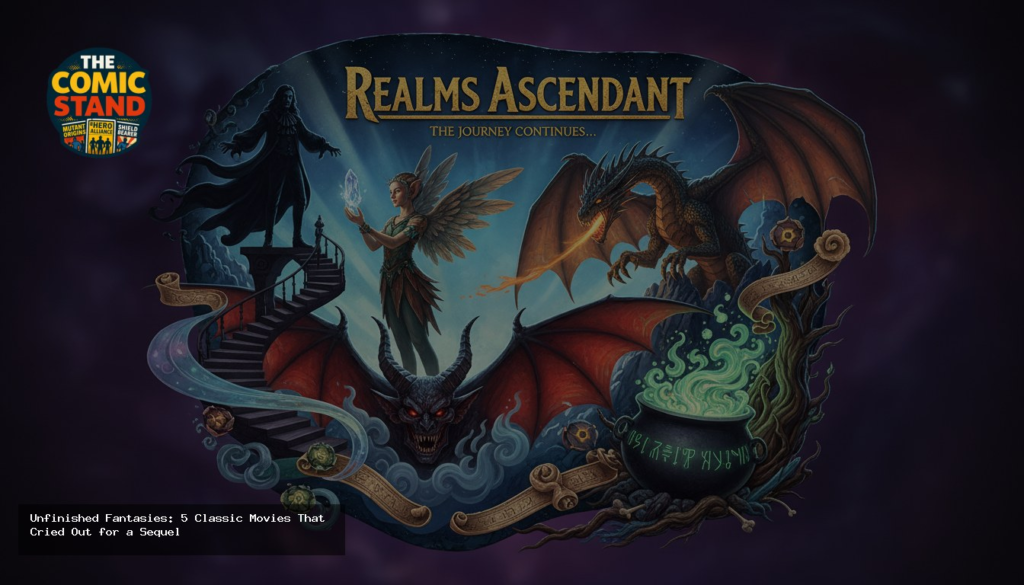
The magic of fantasy cinema lies in its unparalleled ability to transport us to realms beyond imagination, filled with heroes, monsters, and impossible wonders. For many of us in the comic and pop culture community, these films weren’t just entertainment; they were gateways to new obsessions, inspiring countless hours of discussion, fan art, and even the seeds of our own creative endeavors. While some sagas bless us with sprawling trilogies or extensive franchises, there’s a particular bittersweet ache that comes with a truly brilliant fantasy film that stands alone, its vibrant world and compelling characters left without a proper cinematic continuation.
It’s a sentiment deeply felt within our circles, debated at conventions, and pondered over late-night rewatches. We don’t just consume these stories; we internalize them, dissect them, and imagine their futures. Today, The Comic Stand is diving deep into that collective yearning, spotlighting five classic fantasy films that, by every measure of their narrative depth, world-building prowess, and sheer enchanting power, absolutely deserved a sequel that, for various reasons, never graced the big screen. These aren’t just movies; they’re cultural touchstones, and their unfinished stories continue to echo in the halls of fantasy fandom.
1. Labyrinth (1986): The Goblin King’s Unfinished Game
Few films capture the whimsical yet menacing spirit of fantasy quite like Jim Henson’s 1986 masterpiece, Labyrinth. Starring a young Jennifer Connelly as Sarah and the iconic David Bowie as the enigmatic Goblin King Jareth, the film is a mesmerizing blend of groundbreaking puppetry, stunning visuals, and a hauntingly beautiful soundtrack. Sarah’s desperate quest to rescue her baby brother from Jareth’s clutches takes her through an elaborate, ever-changing maze populated by Henson’s unforgettable creatures, each encounter a test of wit and will. The film is a coming-of-age story disguised as a fantastical adventure, exploring themes of responsibility, temptation, and the blurry line between childhood fantasy and adult reality.
The ending of Labyrinth is famously ambiguous, with Jareth retreating but promising to always be there for Sarah, should she ever need him. This open-ended resolution, while narratively satisfying in its own right, left an entire generation of viewers wondering: What if she did need him? What if the Labyrinth called to her again, perhaps in a different form? A sequel could have explored Sarah’s life years later, perhaps as an adult grappling with new responsibilities, only to find the magic of the Labyrinth, or Jareth himself, re-entering her world. Imagine the complexities of an adult Sarah confronting Jareth, not as a defiant teenager, but as a woman who understands the allure and danger of his world more intimately. The rich tapestry of characters, from Hoggle to Ludo to Sir Didymus, offered endless possibilities for further adventures and deeper character development. The film’s cult status has only grown over the decades, cementing its place as a beloved classic. At conventions, you’ll find countless cosplayers embodying characters from the film, and discussions about potential continuations are always lively. Collectors covet original artwork, soundtracks, and action figures, testament to the film’s enduring charm and the desire to keep its magic alive. A sequel would have been a chance to revisit a truly unique cinematic world and explore its profound impact on a maturing protagonist, providing a narrative arc that many fans have theorized about for years.
2. The Dark Crystal (1982): The Fate of Thra Post-Conjunction
Another monumental achievement from Jim Henson, The Dark Crystal transported audiences to the alien world of Thra, a place of breathtaking beauty and terrifying darkness. This film was a pioneering effort in creature design and puppetry, telling the epic tale of Jen, the last Gelfling, on his quest to heal the broken Dark Crystal and restore balance to his world, dominated by the malevolent Skeksis and the benevolent Mystics. Its mythology is dense, its visuals revolutionary, and its narrative surprisingly dark for a film that appeals to younger audiences. The film concludes with the Great Conjunction, the healing of the Crystal, and the merging of the Skeksis and Mystics back into the noble UrSkeks, restoring harmony to Thra. Jen and Kira, now the last two Gelflings, are left to rebuild their decimated race.
While the recent prequel series proved there was an immense appetite for more stories from Thra, a direct cinematic sequel to the original film could have offered a fascinating look at the aftermath of such a cataclysmic event. What challenges would Jen and Kira face in rebuilding the Gelfling civilization? How would the other races of Thra, like the Podlings and the Garthim, adapt to the new era of peace? The world of Thra is so richly imagined, with its unique flora, fauna, and ancient prophecies, that countless new conflicts and discoveries could have arisen. Perhaps a new threat from beyond Thra, or an internal struggle for power among the remaining creatures, could have tested the newly established peace. The film’s profound impact on fantasy world-building is undeniable, influencing countless artists and storytellers. Discussions among collectors often revolve around the intricate designs of the creatures and the depth of Thra’s lore, with many seeking out behind-the-scenes books and concept art. A sequel would have been an opportunity to expand on the consequences of Jen’s heroic act, delving into the complexities of governing a world reborn and exploring the true meaning of lasting peace and the perpetual struggle against corruption, even after a great victory.
3. Legend (1985): The Eternal Battle for Light and Shadow
Ridley Scott’s Legend is a visual poem, a dark fantasy steeped in mythological archetypes and breathtaking imagery. Starring Tom Cruise as Jack, Mia Sara as Princess Lily, and a truly unforgettable Tim Curry as the Lord of Darkness, the film is a stunning exploration of innocence, temptation, and the eternal struggle between light and shadow. The story follows Jack’s desperate attempt to save Lily and the world from the encroaching darkness unleashed by Curry’s demonic villain, who seeks to extinguish all light by killing the last remaining unicorns. The film is celebrated for its opulent production design, stunning practical effects (especially Curry’s incredible prosthetic makeup), and its atmospheric, dreamlike quality.
The ending of Legend, particularly the more widely seen European cut, leaves a tantalizing thread: Darkness is defeated but not destroyed, merely banished, suggesting his inevitable return. This narrative choice perfectly sets the stage for a sequel that could explore the cyclical nature of good versus evil. Imagine a future where Lily, perhaps older and wiser, must once again confront a resurgent Darkness, or even a new iteration of his evil, with Jack by her side or perhaps a new generation of heroes. The world of fae, unicorns, and ancient forests is so evocatively rendered that it practically begs for more fables within its framework. A sequel could have explored the nuances of maintaining purity in a world constantly threatened by corruption, or delved deeper into the origins and motivations of Darkness himself. The film’s distinct visual style and philosophical undertones have made it a favorite among art enthusiasts and fantasy purists. At comic conventions, discussions often pit the different cuts of the film against each other, and Tim Curry’s performance is consistently hailed as one of fantasy cinema’s greatest villain portrayals. Collectors frequently seek out original posters and promotional materials, especially those showcasing the iconic design of Darkness. A sequel would have allowed for a continued exploration of these profound themes, demonstrating that the battle for the soul of the world is never truly over, and that vigilance, even after victory, is paramount.
4. Dragonslayer (1981): The Age of Diminishing Magic
Often hailed as one of the most realistic and gritty dragon films ever made, Dragonslayer stands apart from its contemporaries with its grounded approach to fantasy. Starring Peter MacNicol as Galen, an apprentice sorcerer, and Caitlin Clarke as Valerian, the film tells a surprisingly mature and dark tale of a kingdom terrorized by the ancient, formidable dragon Vermithrax Pejorative. What makes Dragonslayer so compelling is its portrayal of magic as a rare, often dangerous force, and its titular dragon as a truly terrifying, almost naturalistic beast, rendered with groundbreaking stop-motion animation. The film avoids many fantasy tropes, presenting a world where heroes are reluctant, magic is fading, and survival is a constant struggle.
The conclusion sees Vermithrax defeated, but at a great personal cost, leaving Galen to grapple with the immense power he has wielded and the responsibility that comes with it. A sequel to Dragonslayer could have explored the implications of a world where ancient evils like Vermithrax are vanquished, but the magic used to defeat them is also dwindling. What new threats emerge in this ‘age of diminishing magic’? Would Galen become a true sorcerer, or would he choose a different path, perhaps realizing the inherent dangers of such power? The film’s unique tone and its commitment to a more brutal, less romanticized fantasy world offered a fertile ground for continued storytelling. Imagine Galen encountering other remnants of ancient magic, or facing human threats who seek to fill the power vacuum left by the dragons. The film’s influence on subsequent dragon depictions and its pioneering special effects are often discussed in film studies and among special effects aficionados. Within the comic community, its practical effects are lauded, and its darker tone is appreciated for its departure from more conventional fantasy. Collectors of movie memorabilia often seek out items related to Vermithrax, recognizing her as an iconic cinematic monster. A sequel would have been an opportunity to delve deeper into the socio-political landscape of a world trying to rebuild after generations of terror, exploring the nuanced challenges of a hero who must navigate a reality where the lines between good and evil are far more blurred than in typical fantasy narratives.
5. The Black Cauldron (1985): Unlocking the Prydain Chronicles
Disney’s venture into darker fantasy, The Black Cauldron, is a fascinating and often overlooked entry in their animated canon. Based on the first two books of Lloyd Alexander’s beloved The Chronicles of Prydain, the film follows the young pig-keeper Taran, who dreams of being a hero, as he embarks on a quest to prevent the evil Horned King from obtaining the mystical Black Cauldron and unleashing its undead army. While the film faced a challenging production and was initially not a box office success for Disney, it has since garnered a significant cult following, appreciated for its ambitious scope, darker themes, and memorable villain.
The primary reason The Black Cauldron deserved a sequel is the incredibly rich source material it barely scratched the surface of. Lloyd Alexander’s Prydain Chronicles are a five-book epic, brimming with complex characters, deep mythology, and a sprawling narrative that sees Taran grow from an impulsive youth to a true leader. The film only adapts elements of the first two books, concluding with the defeat of the Horned King. A sequel, or even a series of sequels, could have truly brought the full scope of Alexander’s vision to the screen, exploring Taran’s further adventures, his relationships with Princess Eilonwy and the bard Fflewddur Fflam, and the overarching struggle against deeper, more ancient evils. Imagine seeing characters like the enigmatic Doli or the wise Dallben fully realized in animated form, or witnessing Taran’s journey to the magical realm of Annuvin. The film’s unique place in Disney history as a more mature, risk-taking animated feature makes its truncated story all the more poignant. Discussions among Disney fans often center on its unique art style and the potential it held for a full fantasy saga. Collectors of Disney animation cels and production art often consider pieces from The Black Cauldron to be particularly unique due to its distinct aesthetic. A proper sequel would not only have honored Alexander’s literary legacy but also cemented Disney’s ability to tackle epic, multi-part fantasy narratives, offering a complete and satisfying journey for Taran and the enchanting world of Prydain.
The Comic Stand Takeaway: Our Unfinished Fantasies Live On
The longing for a sequel isn’t just about wanting more screen time; it’s a testament to the power of these stories to resonate deeply within us. When a film creates a world so vivid, characters so compelling, and a narrative so rich with potential, the desire for its continuation becomes a shared experience within the fan community. These five films, each a classic in its own right, remind us of the boundless imagination of their creators and the enduring impact they’ve had on fantasy storytelling.
Even without official cinematic follow-ups, these worlds live on. They thrive in our discussions, fuel our fan theories, inspire our own creative endeavors, and continue to introduce new generations to the magic of classic fantasy. They are proof that some stories are so powerful, so resonant, that they refuse to simply end when the credits roll. They become a permanent fixture in our collective pop culture consciousness, forever inviting us to imagine what could have been. What other classic fantasy films do you believe deserved a sequel? Share your thoughts and keep the conversation going – that’s what The Comic Stand is all about!
Explore More from The Comic Stand
Find more comic news, convention listings, artist profiles, collectibles, and community features from The Comic Stand.
Comic NewsComic ConsComic ArtistsComic CommunityShop CollectiblesNewsletter SignupAbout The Comic StandContact