

‘Everything in Color: A Love Story’ is an impeccably crafted comic autobiography
April 29, 2026
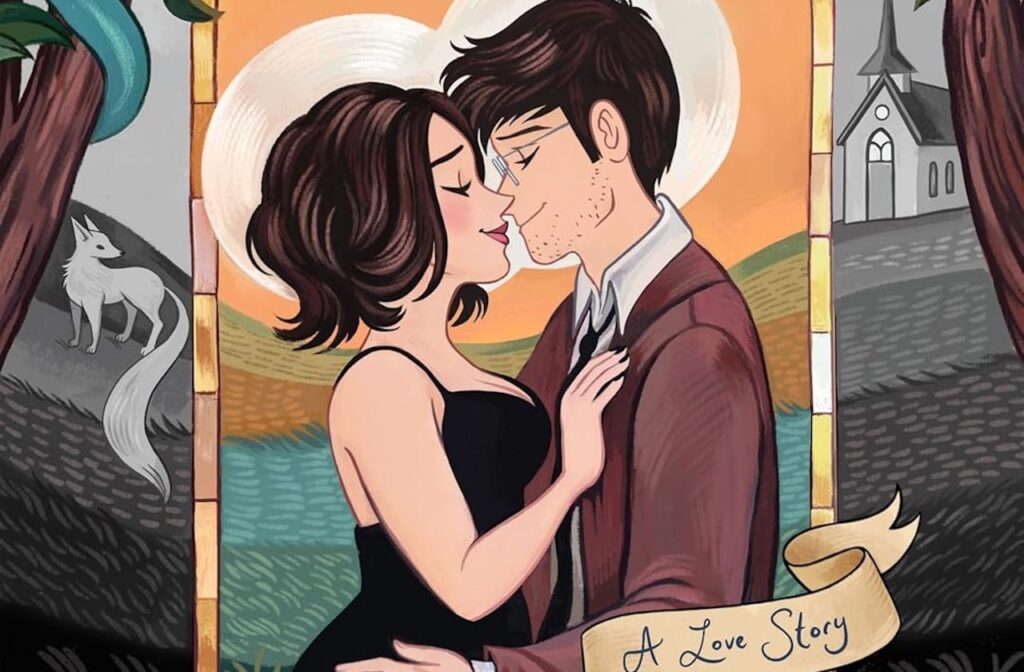

At their best, autobiographical comics are their creators’ study of themselves: their life as they’ve lived it, the connection between their artistry and their experiences, their examination of their self-perception. Their approaches to sequential storytelling are as key as the stories they choose to tell. In Zoe Thorogood’s peerless It’s Lonely at the Centre of the Earth, for instance, Thorogood employs a wide range of styles to depict the assorted facets of her personality, from a self-portrait in her regular style to a cartoon romantic to a self-loathing sketch. Derf Backderf’s haunting My Friend Dahmer draws its power from a combination of Backderf’s research into the teenage years where he was classmates and semi-friends with future serial killer Jeffery Dahmer, his excavation of memories of that time, and the unavoidable fact that there are things about Dahmer’s life that he does not and will never know for certain. With Everything in Color: A Love Story, artist and author Stephanie Stalvey skillfully examines her childhood, adolescence and young adulthood in a conservative Evangelical community, her meeting and falling in love with her eventual husband James, and the evolution of her faith and self-image in adulthood via a consistent contrast between black and white and colored images.
Stalvey grew up in an American evangelical family and community in the 1990s and 2000s. Throughout her life, she struggled with the community’s paradoxical insistence that God was love, and that the best way to acknowledge that love was to recognize that you were a sinner teetering on the edge of damnation, like anyone and everyone who did not belong to your faith. As a girl and young woman, she grappled with systemic misogyny in the secular and religious communities, particularly the notion that experiencing sexual desire or pleasure before marriage would irretrievably damage her. In college, studying art, Stalvey struggled with the dogma she’d grown up with whispering in her ear as she studied other cultures and expanded her horizons. And there was also the matter of her falling in love.

23rd St.
James, the seminarian graduate student who Stalvey would ultimately marry, was caring, kind, sweet, and thoughtful. He was also incredibly sexy, and Stalvey had grown up believing that even thinking someone was sexy before marriage, let alone accidentally touching them, put her soul at hazard. Navigating her care and desire for James was a significant part of Stalvey working to build a faith and a life that she wanted, a life where she could accept and heal all of herself, and a faith that connected her to the world. A life and faith that, when she and James married and became parents, would help their son Tommy be a good kid without living in anxiety and dread at the prospect of eternal damnation.
Structurally, Stalvey divides Everything in Color into ten sections; a prologue and nine chapters. She jumps between the present, and recent past, tracking her and James’ raising Tommy, which she depicts in lush color; and her childhood and young adulthood, with the most focus going to her time in college, questioning her faith and romancing James, which she primarily depicts in black and white. Her narration is a constant, and works in concert with in-scene conversations.
For a point of comparison, Stalvey’s work resembles fellow autobiographer Lucy Knisley’s comics, particularly their shared skill at discussing complex topics through discrete sequences that wind back into the book’s core narrative. In the case of Everything in Color, these include the assorted corners of conservative U.S. evangelical Christianity, such as purity culture and the belief that the end of the world and final judgment are imminent. Stalvey situates her and James’ experiences as two specific examples of the community’s wider patterns, and offers clear-eyed insights into both those big picture patterns and the impacts that they had on her and James. Everything in Color’s present day sequences, which focus on Stalvey’s experiences with parenting, teaching art, and building a faith that she finds true are just as frank and insightful.

23rd St.
Visually, Everything in Color is sumptuous. In addition to moving between color palettes, Stalvey shifts styles as needed. When exploring her romance and eventual sexual relationship with James, Stalvey focuses on the way they moved and move around each other, especially as they cross the bridge from trying to make as little physical contact as possible for the sake of purity to seeking each other because their wanting each other is, in fact, a good thing. When delving into the fraught, pernicious headspace that her evangelical upbringing built, Stalvey shifts from realism to a surreal expressionism, capturing its poisonous, isolating nature through images like her younger self isolated swallowed up in a great void. She flips this surrealism on its head when exploring the faith that she’s built in adulthood, maintaining the surreality but deploying it in elaborate tableaus dense with allusion and symbolism. In lighter moments, particularly as Thomas starts to become his own person, Stalvey opts to cartoon, simplifying her character designs to emphasize expression. A late page where Stalvey finds herself with a nervous grin that screams both “This could be good” and “OH NO” is delightfully funny.
Everything in Color‘s one failing is that some of its narration reads more like an essay that was overlaid on an illustration, as opposed to a comic essay. It’s not a constant issue, but it is noticeable, particularly given the book’s strength as a whole. Otherwise, it’s a gorgeously illustrated, romantic, sensual, thoughtful comic autobiography. It’s very fine work from Stalvey, and I’ll be excited to read her next work.
{“@context”: “http://schema.org/”,
“@type”: “Organization”,
“name”: “‘Everything in Color: A Love Story’ is an impeccably crafted comic autobiography”,”image”: [
“https://i0.wp.com/aiptcomics.com/wp-content/uploads/2026/04/everything-in-color4-1-e1777380731427.jpg?fit=1280%2C840&ssl=1″
],”review”: {
“@type”: “Review”,
“reviewRating”: {
“@type”: “Rating”,
“worstRating”: “0”,
“ratingValue”: “9.5”,
“bestRating”: “10”
},
“author”: {
“@type”: “Person”,
“name”: “Justin Harrison”
}
}}
More from The Comic Stand: Explore more comic news, convention listings, artist features, collectibles, and collector resources from The Comic Stand. Comic News | Comic Cons | Comic Artists | Shop
Explore More from The Comic Stand
Find more comic news, convention listings, artist profiles, collectibles, and community features from The Comic Stand.
Comic NewsComic ConsComic ArtistsComic CommunityShop CollectiblesNewsletter SignupAbout The Comic StandContact