

‘Memories of Giselle’ is a powerful look at trauma and healing
May 6, 2026
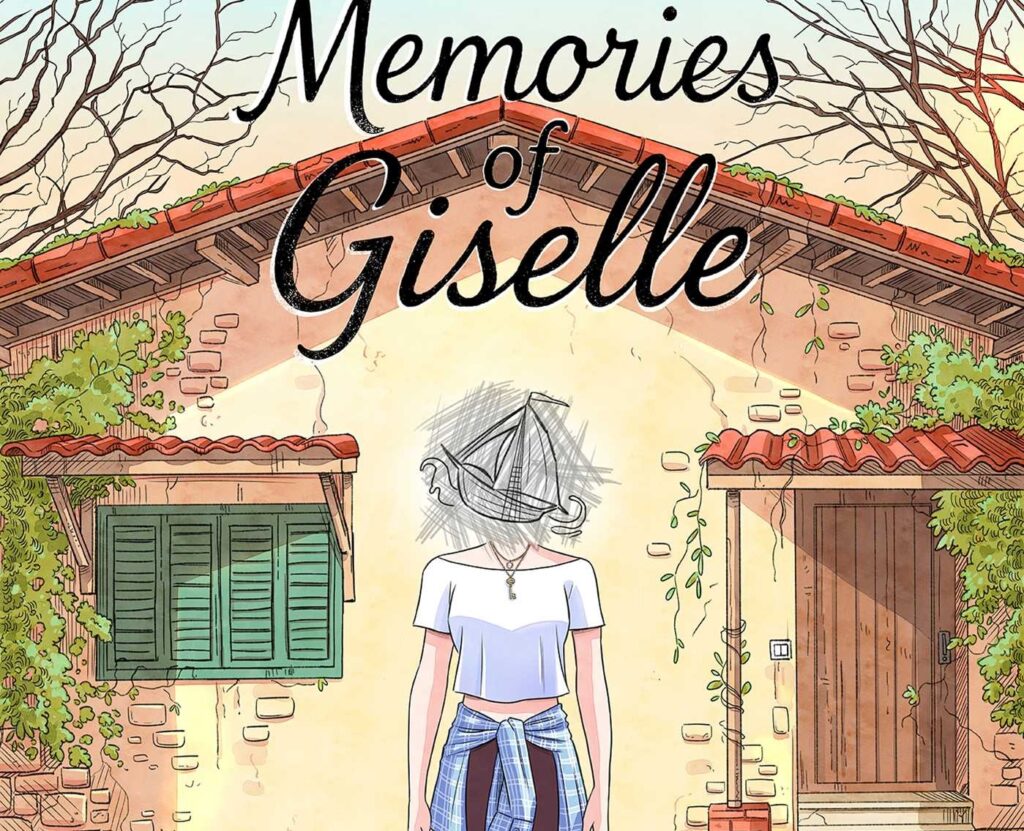

Memories of Giselle is the kind of debut graphic novel that lingers with you. Written and drawn by Katia Vecchio, the intensely personal story draws you in with its genuine characters as a dark trauma slowly unravels, pulling you into the life of one girl while quietly building toward something much more devastating than you expect. With an advance copy in hand (out July 14), I had to share how genuine the book feels, as if these characters are real. Some of this story is based on Vecchio’s life, but it’s rare to find a graphic novel that earns your interest so well.
The story opens with Giselle at her fifth birthday party. Everything seems perfectly normal, from blowing out the candles on her birthday cake to her loving parents snapping pictures. It’s a perfectly ordinary day, and yet Vecchio draws you into the moment with a sleight-of-hand focus on Giselle’s grandmother, who isn’t that out of the ordinary, but the framing and panel work draw your interest. It’s an opening that makes you second-guess the joy in the scene, prompting you to wonder what’s really going on.
After those first three pages, much of this graphic novel is set through Giselle’s teenage years, presenting a life that feels, at first, completely normal. She has friends, hobbies, and a caring, if somewhat distant, family. That opening scene sets up the sense that something feels off, and Vecchio does an excellent job of planting this unease, making this book a kind of the puzzle of Giselle we need to solve.

Credit: Image Comics
One of the most effective clues is how Giselle’s brother Mirko is drawn. His face is often obscured, turned away, or hidden behind objects. Even in flashbacks, he is wearing a scuba mask. It’s a subtle, but powerful technique that causes you to question his role in the story long before you understand why. You start to read into all situations, wondering what he knows or what he is hiding. Much like Giselle not understanding key moments at her fifth birthday, you, too, are left questioning who or what happened.
Over the course of the graphic novel, your attention turns to the grandmother, who is a major figure in Giselle’s memories. As far as parental figures go, something’s not quite right. She’s cold and somehow distant, even in moments that should be warm. From birthday parties to beach outings, none of it lands the way it should. Vecchio doesn’t spell anything out early on, but she builds a quiet tension that keeps you reading, trying to piece together what’s wrong.


A story like this could easily get too wordy or grow boring in its lack of answers, but there’s an expert pace to this read, with key information delivered at the perfect moments, either through dialogue or flashbacks. It allows the reader to come to their own conclusions, that is, until the final act. Ultimately, you’re right there with Giselle trying to find the missing piece and explain the mysterious vision of a sailboat that is tied to some lost memory.
What makes the book work so well is how grounded everything feels. Giselle’s friendships are believable and full of life. Her parents are not villains and are trying their best. Most people will be able to connect with Giselle and relate to a life where she’s finding her autonomy while also learning about herself. It all adds to the sense that this could happen anywhere, to anyone.
About a quarter into the book, the story shifts with Giselle getting a bit older and doing more adult things like late-night parties. It’s in this section. The passage of time helps convey the trauma, and the connection to the grandmother is deep. Another time jump reveals that as she gets older and into more adult situations, the trauma is far darker than one might have realized. Her struggles with intimacy, even down to discomfort with her own body, are handled with care and honesty. Vecchio doesn’t rush these moments. Instead, she lets them sit, allowing readers to feel the confusion and frustration Giselle experiences.
The final act reveals the story’s dark secret and then leans into a message of hope and growth. Without spoiling the reveal, the source of Giselle’s trauma is handled in a way that feels both shocking and deeply sad.
From there, the story shifts toward Giselle and her therapy. The therapy centers the focus, drawing Giselle’s attention to a perspective the reader has had from the start, making it as if we’re right there by her side. By the end, there are no simple answers here. Giselle isn’t suddenly better. She acknowledges that she may never be fully “fixed’’, but she’s moving forward. That honesty gives the end real weight. Since we were there with her from her early teens into her late teens, you feel close to her, and by the final page, you’re happy for her growth and her ability to move on to brighter things.

Credit: Image Comics
Vecchio gives a manga-like style to the book’s characters. By contrast, the environments are highly detailed, adding realism to the story, and the attention to detail in things like hair and character acting helps sell that realism. The pacing largely works thanks to the art and its way of probing the characters.
Meanwhile, the choice of bright colors and warm lighting contrasts with the darker themes beneath the surface. It’s an interesting choice, even in mundane transitional scenes, giving the book a brighter, more hopeful feel. Maybe it’s a way to convey everything is fine when it really isn’t. The bright colors and lighting are key, creating a sense of normalcy that makes the underlying trauma hit harder when it finally surfaces.
Memories of Giselle is not an easy read, but it’s an important one. It handles difficult subject matter with care, and its life is widely relatable. By the end, it’s a powerful debut that blends mystery, character study, and emotional honesty, leaving you to linger long after you finish. Katia Vecchio carefully builds tension through subtle storytelling choices, rewarding readers with deeply real characters. The focus on therapy and healing adds an important layer, grounding the story and making it one of hope. It is a difficult read at times, but one that feels necessary and thoughtfully executed.
Source: Read original source
More from The Comic Stand: Explore more comic news, convention listings, artist features, collectibles, and collector resources from The Comic Stand. Comic News | Comic Cons | Comic Artists | Shop
Explore More from The Comic Stand
Find more comic news, convention listings, artist profiles, collectibles, and community features from The Comic Stand.
Comic NewsComic ConsComic ArtistsComic CommunityShop CollectiblesNewsletter SignupAbout The Comic StandContact